Students always benefit from more rhetorical analysis. This is a simple statement that our disciplinary identities, the connotations that automatically form in our brains as rhetoricians and writing teachers, perhaps might function to cloud. What I mean to say here is not that (or not only that) students benefit from more rhetorical analysis assignments being … Continue reading Re-Framing RetroActive Composition
Tag: rhetoric
Teacher Roles In Student Protests: When Passivity Becomes Rhetorical Action
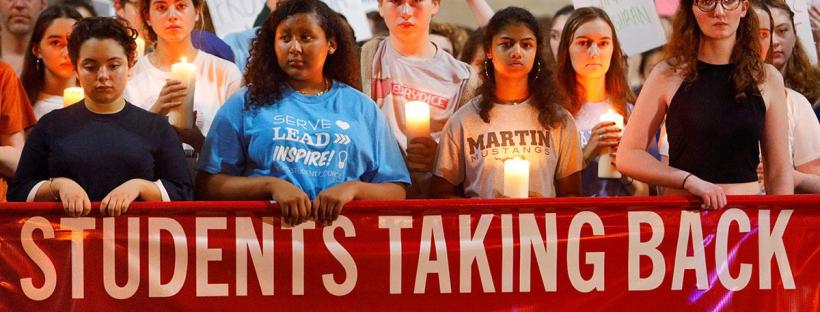
Teacher Roles in Student Protests: When Passivity Becomes Rhetorical Action It’s spring break for my students and I in upstate New York, which means lots of snow, cancelled flights, undrivable roads and plenty of cancelled plans. It means there’s plenty of time for grading (and for procrastinating), and there’s plenty of time … Continue reading Teacher Roles In Student Protests: When Passivity Becomes Rhetorical Action
Hacking Composition
Hacking, rhetoric and writing share unique histories that have overlapped a number of times throughout the history of American academia, as I've written about here. This semester, one of my Writing Studies II courses (a standard 2nd-term first year-composition iteration) tackles hacking and its relationship to writing, venturing a course theme I'm excited to call … Continue reading Hacking Composition
Stand Up!- Theorizing the Activist UnEssay, Pt. I
A great deal of research in rhetoric, communication and composition in recent decades has attempted to bridge classrooms in higher education with deeper considerations of civic purpose, social activism and training for capable citizenship. However, these pushes toward community literacy and classroom advocacy have yet to fully consider the impact social web … Continue reading Stand Up!- Theorizing the Activist UnEssay, Pt. I
Writing With Mirrors: Reflecting On Goals and Choices in FYC
Here's a proposal I've prepared for a session at Writing Matters, a conference to be hosted at SUNY Cortland on March 18th 2018. *** Writing with Mirrors: Reflecting on Goals and Choices In FYC Jacob Richter Student-writers benefit from sustained and deliberate reflection on not only the writing of professionals, but also … Continue reading Writing With Mirrors: Reflecting On Goals and Choices in FYC
Best of Rhetoric and Composition 2018
With 2018 nigh upon us, it's time to look back at the best contributions from independent rhetoric and composition journals over the past year. I'm moving through the process of evaluating a number of essays for inclusion in a "Best of the Independent Rhetoric and Composition Journals 2018" anthology, so my mind is already geared … Continue reading Best of Rhetoric and Composition 2018
Hacking the Curriculum: FYC, Critical Information Literacies and Social Web Environments
Hacking the Curriculum: FYC, Critical Information Literacies and Social Web Environments Among the benefits of teaching writing at my current university institution is the freedom and flexibility it allots to its composition instructors. Next semester I’ll be teaching Writing Studies II, the second leg of the institution’s FYC sequence. Writing Studies II is … Continue reading Hacking the Curriculum: FYC, Critical Information Literacies and Social Web Environments
Probing Democracy: Gorgias, Public Rhetoric and the Electrate Polus
Despite a frustrating lack of any palpable challenge to Socrates' naive, limited essentialism, Plato's Gorgias is of undeniable interest to any rhetorician even beyond the explicit discussion of oratory and sophistry contained in its opening discussion. The dialogue is well known in composition and rhetoric for its inaugural debate in which Socrates utilizes his famed method … Continue reading Probing Democracy: Gorgias, Public Rhetoric and the Electrate Polus
Putting it in Writing: Teaching Circles and Institutional Return on Investment
*** The following is an abstract submitted to the 2017 NeMLA convention in Pittsburgh, Pennsylvania*** For the Fall 2017 semester, the SUNY Cortland composition program implemented “teaching circles” as a required, yet loosely-defined, obligation for all instructors teaching FYW in the program. Hoping to spur dialogue, conversation and communication among program stakeholders, the WPAs … Continue reading Putting it in Writing: Teaching Circles and Institutional Return on Investment
SUNY Council on Writing
I had the pleasure of presenting alongside a number of talented writers and writing educators at this past weekend's SUNY Council on Writing conference. My presentation on creative thinking's role in first-year composition classrooms was one of many that attempted to voice the inner intricacies and challenges facing our discipline as teachers of literacy and … Continue reading SUNY Council on Writing